As we muster our scholarly resources to try and figure out what is what in the brave new world that we have tumbled into – have been tumbling into for a while, perhaps – here are three things from the archives that might have something to say. Two of them are book chapters, so they haven’t had the airtime that they perhaps deserve. They were published a few years ago and so I’m reproducing them here. The third is a BBC radio essay from 2011, The Entrepreneur.

https://www.wsj.com/articles/evolution-of-desire-review-who-was-rene-girard-1527886927
First up is a chapter I wrote on sacrifice and management, for a collected volume on the works of Rene Girard.
Academic publishing is a curious game, and sometimes things end up in places and on topics you don’t expect – having written a chapter about an obscure Stanford theologian with fascist leanings, I promptly buried it! But now we are taking an interest in Girard, who is said to have inspired Peter Thiel and other tech barons. The chapter explores how capitalism requires sacrifice, not only the sacrifice of workers in the cause of profits, but even the self-destructive sacrifice of the CEO. Just look at Elon Musk’s antics at the company formerly known as Twitter, slashing the workforce, making survivors catch their few hours of rest on the office floor and then ditching them as well. His sleepless work frenzies at Tesla are the stuff of legend. We may think of business as being based on doux commerce, but increasingly it demands destructive sacrifice and self-sacrifice, a ‘self-donation that keeps the sacrificial cogs going’, as the editor Marcia Pally puts it. It’s here – enjoy!
If you want to cite it (please do!) it’s Roscoe, P. (2019). Strategy, Spectacle, or Self-emptying? Sacrifice and the Search for Business Ethics. In M. Pally (Ed.), Mimesis and Sacrifice: Applying Girard’s Mimetic Theory Across the Disciplines (pp. 190-202). Bloomsbury.
I published a version of the talk that led to this here: Sacrifice and the crypto-theologies of management
The second is an essay I wrote for the 2020 The Sage Handbook of Responsible Management Learning and Education. I think somebody nobbled me to write the obligatory “critical” chapter for the volume. The argument, which I had been working up for a while, draws on STS ideas about distributed cognition and the politics of measurement to argue that the ethical freedom of managers is shaped and constrained by the mechanisms through which decisions are made. Simply put, people ‘see’ differently when they are working as managers. By this account, it takes more than a bit of education in responsibility to change the shape of contemporary business; we need a wholesale rethinking of the models, modes of thinking, and ways of measurement that have been incorporated into the structures and devices of organizations. It’s here:
Again, the citation: Roscoe, P. (2020). The Dark Side of Responsible Management Education: An Ontological Misstep? In D. Moosmayer, O. Laasch, C. Parkes, & K. Brown (Eds.), The Sage Handbook of Responsible Management Learning and Education (pp. 347-362). Sage.

The final piece is The Entrepreneur, a radio essay made for BBC Radio 3 many years ago now. It focused on the late Steve Jobs, at the time the darling of every undergraduate would be CEO. Following Bruno Latour’s account of Pasteur in The Pasteurisation of France, I wondered how such a man could have done so much. I concluded, of course, that Johnson was able to enrol the efforts of others into his campaign, building on their innovations and designs, grabbing hold of technological trajectories that were already remaking our world. Jobs’ genius was to capture the moment with his black polo neck, his legendary bad temper, and his theatrical displays. We might think the same of Elon Musk, not the man but (as I write elsewhere, coming soon) ‘Musk the collective delusion, the spectacle, hurling insults and refusing to stand by them, preening on Saturday Night live; the rocketeer and Mars colonist carried on a wave of sheer make-believe money, dogecoin to the moon; the fact that he is a kind of ontological hybrid of capital and fantasy and carnival, a figure who is more meme and reddit chat than analyst briefing and dividend…more than a man: an assemblage, a network, a mixing pot of culture, technology, performance and financialization.’
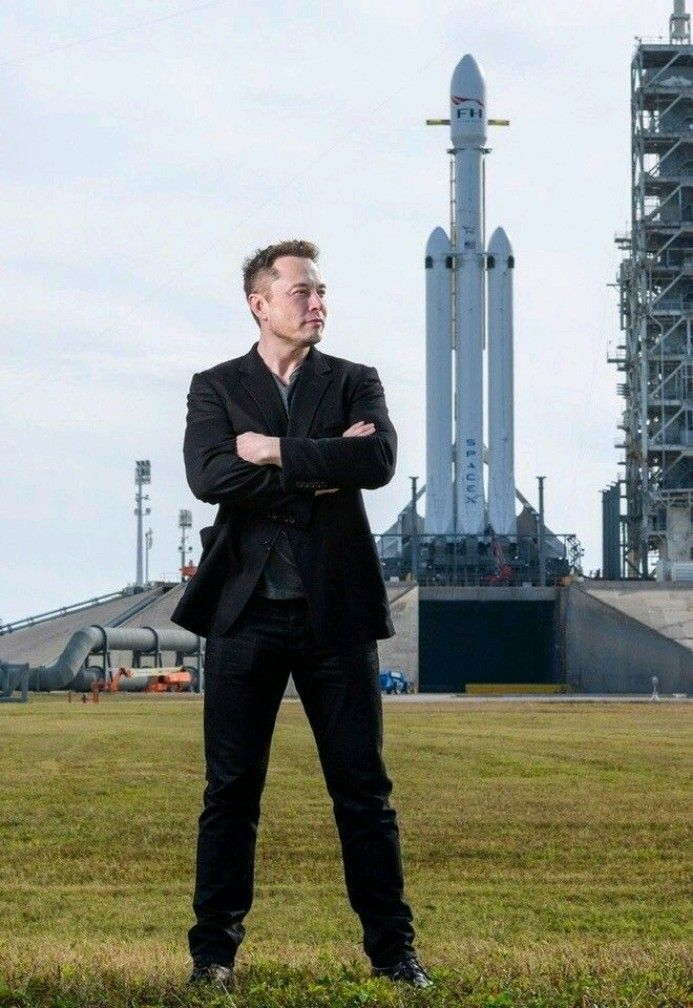
Three things from the archives. I hope they are useful, that they resonate and give you some tools to think with. If you like them, pass them on! And here’s Elon with his rocket. A picture speaks a thousand words, they say.

 Philip Roscoe